
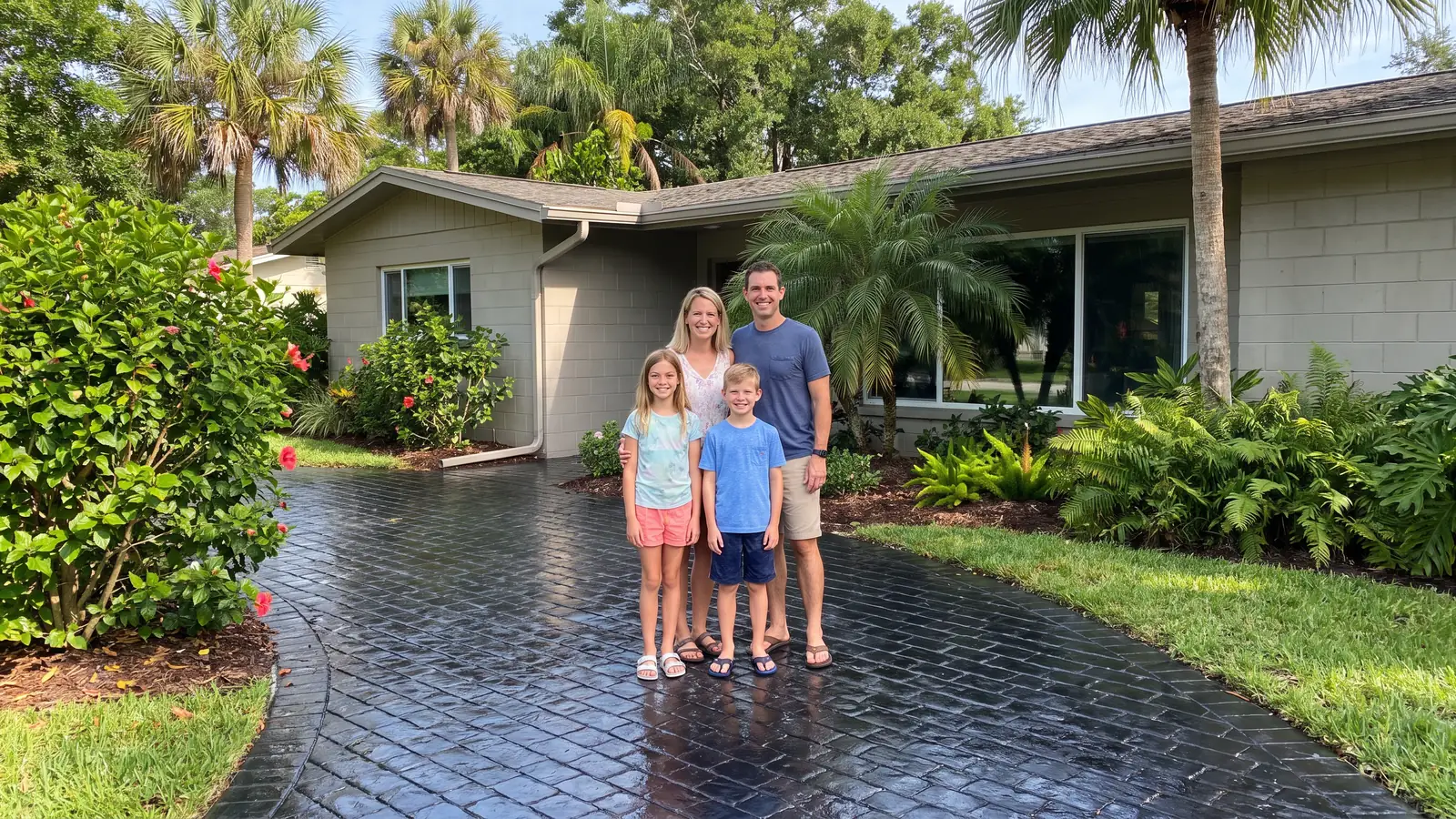
Paver sealing for Southside homes
Paver Sealing in Southside, FL
Fading, weedy Southside pavers can be washed, re-sanded and sealed by a local contractor, so call (904) 901-6561.
- Brings out deeper paver color
- Fresh joint sand helps lock pavers in place
- Gives weeds less room to grow
- Makes the surface easier to keep clean
- Free estimate, no obligation
Request a Free Estimate
Free, no obligation.
Fast, careful paver sealing in Southside
Paver sealing is available across Southside, from the older ranch streets near Beach Boulevard to the condo grounds around Southpoint. A local contractor handles the wash, the new joint sand and the sealer on driveways, walks, patios and pool decks, and the estimate is free. For a price on yours, send a quick request, and a reply lands within 1 business day, usually much sooner.
About half the homes in the Southside ZIP are rented, and nearly half of the housing is multi-family. That means many pavers here belong to a landlord, a manager or a condo board. Whoever makes the call, (904) 901-6561 and say what you see today: gray film, weeds in the joints, faded color. After a wash, fresh sand and a coat of sealer, the same surface can read as one even shade again, with joints that stay full and a color that looks alive in the sun.
Why hire a local paver sealing contractor in Southside?
Southside puts 1950s ranch streets and condo courtyards in the same ZIP, and each one asks for a different kind of job. A local contractor can tell which one you have, so send a quick request.
A look first, then a price
A contractor measures at no charge and names a price before you commit to anything. The visit itself is free.
A range you can hold up
Roughly $1.75 to $3.25 per square foot is what companies here post for washing, sanding and sealing. Use it to size up a Southside bid. The range holds for a ranch driveway and for a condo courtyard alike.
Small jobs get quoted too
A patio or pool deck can be priced alone. Ask for the measured square feet and the rate in writing.
The finish is your pick
Matte or wet look, this week or next month. A Southside estimate carries no obligation, and a reply comes within 1 business day.
Get Your Free Estimate in Southside
Tell us about your pavers in Southside.
Free, no obligation
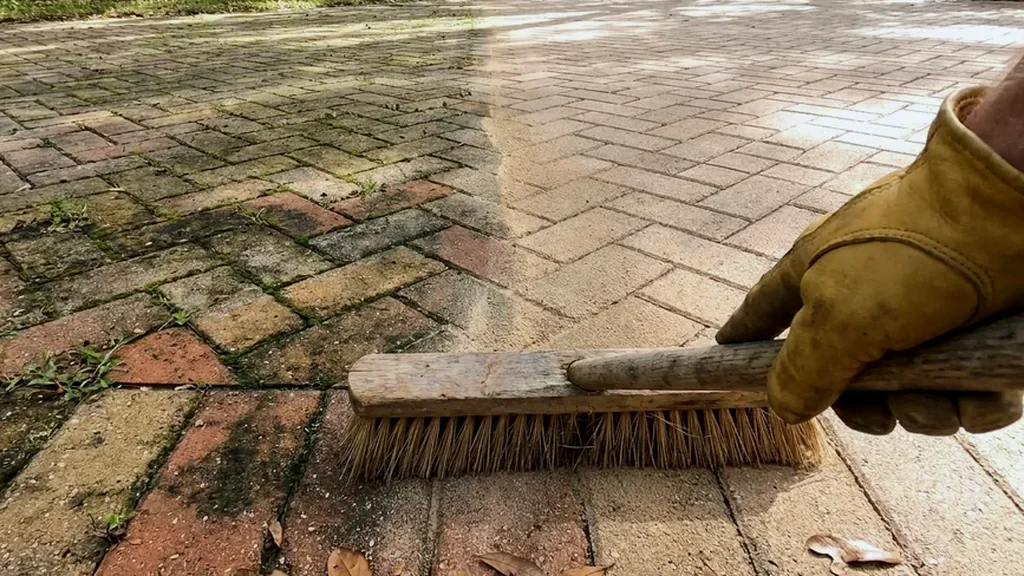
What paver problems show up most in Southside?
Joint sand that rinses out
The USDA first described the Ortega soil series on the Southside, a sand with rapid permeability. Jacksonville adds roughly 52 inches of rain a year, much of it in short summer downpours. Water drains through sand fast and takes joint sand along every time. Open joints let soil in, which is where weeds get their start. A walkway that looked tight two summers ago can look gappy now. The Ortega series was first described about 1,100 feet east of St. Johns Bluff Road, so this sand is the Southside's own.
Green film on the shaded side
Lakewood is known for its mature landscape, and many Southside lots keep tall trees over the yard. That is the pattern a paving trade article describes, with moss and algae living mainly where heavy shade keeps pavers damp. So the walkway beside the garage, or the patio under the oak, goes green first. Sealer cannot cover that growth. It has to be washed off before anything goes on. Englewood was platted in 1926 and Lakewood was built out by 1961, which gives the trees there plenty of years to reach full size. Lakewood's streets are named for colleges such as Clemson, Cornell and Emory, and its landscape is described as mature.
Damp ground near Pottsburg Creek
Pottsburg Creek runs through the heart of the Southside and is fed by retention ponds and storm drains, so its level swings. The USDA describes the Pottsburg soil as somewhat poorly drained flat ground, with a water table within two feet of the surface for part of the year. Yards on flats like that can stay wet after a storm. Sealer needs a dry surface, so a wet lot may push the date. If one corner of your driveway stays dark a day after rain, point it out at the first visit. Maps show a creek by that name as early as 1824, so wet ground here is nothing new.
A coat nobody remembers
A real estate page puts the median build year in Southside Estates at 1952, so many houses have changed hands more than once. A past owner may have sealed the pavers with something unknown, and a solvent-based coat rules out a water-based one. The contractor tests what is there first. A patchy or peeling coat is a clue, and so is any old receipt or product name you can dig up. With about half the housing in the ZIP multi-family, shared pavers may also have been sealed by a manager rather than an owner.
Rust lines from sprinklers
University of Florida extension says most Florida well water carries iron, and that using it for irrigation can leave orange stains. If your sprinklers run off a well, check the pavers where the spray lands. Rust marks should be treated before sealing, since the coat would lock them in. Aiming the heads away from the pavers helps keep them from coming back. Ask the contractor to check the edges nearest the sprinkler heads, where marks usually start. A sprinkler zone that overlaps a walkway is the usual cause, and turning the nozzle away is an easy fix.
Does an HOA or condo board on the Southside need to approve paver sealing?
It depends on what your association wrote down. A homeowners association in Florida may regulate looks only as far as its declaration or published guidelines reach, and its rules must hit every owner alike. One Southside paver page says a natural-look sealer may count as upkeep, while a high gloss is more likely to need a yes. Read your papers, then send a quick request with the finish you have in mind.
Wikipedia lists Deercreek and Baymeadows among the Southside's parts. Deercreek has over 700 homes around a golf and country club, and its association runs the private roads and the gate house, while Sonoma Southside, in ZIP 32256, is all condominiums. Pavers on shared grounds belong to the association, not to one owner, so ask who owns what and who pays before you call (904) 901-6561.
Older streets raise a different question, which is how many owners the pavers have seen. Englewood was platted in 1926 and grew into a place of modest ranch homes, and Lakewood was largely built out by 1961 with streets named for colleges like Cornell and Emory. If your house is that age, a past owner may have added pavers or sealed them. Tell the contractor what you know about past work when you send a quick request.
What does paver sealing cost in Southside?
Around Northeast Florida, posted rates for this work run $1.75 to $3.25 per square foot to clean, sand and seal. On the Southside, where you land in that range depends on the size of the area, how stained it is and whether old sealer has to come off. A small patio can cost more per square foot, since setup time does not shrink with the surface. For your own number, send a quick request.
Access counts as well. A locked gate, stairs or a narrow side yard add prep time. A condo courtyard reached by one tight path takes longer to set up than an open driveway off Beach Boulevard. Tell the contractor about the layout when you call (904) 901-6561, and add a photo of the gate or the path.
| Paved area | Typical example | Clean, sand and seal |
|---|---|---|
| 300 sq ft | Small patio or walkway | $525 to $975 |
| 600 sq ft | Two car driveway | $1,050 to $1,950 |
| 1,000 sq ft | Large driveway or pool deck | $1,750 to $3,250 |
| 1,500 sq ft | Driveway plus pool deck | $2,625 to $4,875 |
Math based on the $1.75 to $3.25 per square foot that Northeast Florida paver companies publish. Your contractor sets the actual price after seeing the surface. Repairs, leveling and stripping failed sealer are usually extra.
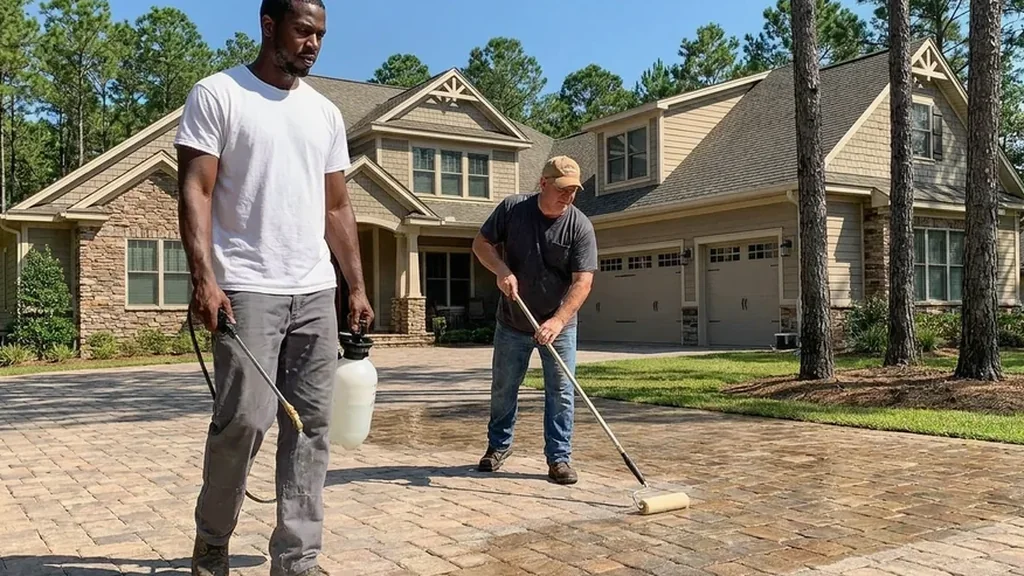
How does a paver sealing job work in Southside?
Measure and check what is on the surface
The contractor walks your Southside pavers, measures the area and looks for low spots. Sunken sections get reset first, because sealing over a dip keeps the dip. Past sealer is tested too. A water-based coat cannot go over a solvent-based one, so the answer decides which product comes next. You get the plan before the work is booked. On condo grounds, the contractor notes which paved areas belong to the association and which belong to you.
Wash off the film and the stains
Washing clears the green film from shaded corners and the grime that tires leave. Oil and rust get pre-treated, and a few deep stains may not come out all the way. Rinse water is kept off flower beds and off the pool where possible. Stained areas near the garage door or the mailbox walk get a second pass. Pool decks and courtyards are rinsed with care so water does not run toward doors or into shrub beds. A condo pool deck gets its own pass, since its pavers see chlorine and bare feet.
Put the sand back in the joints
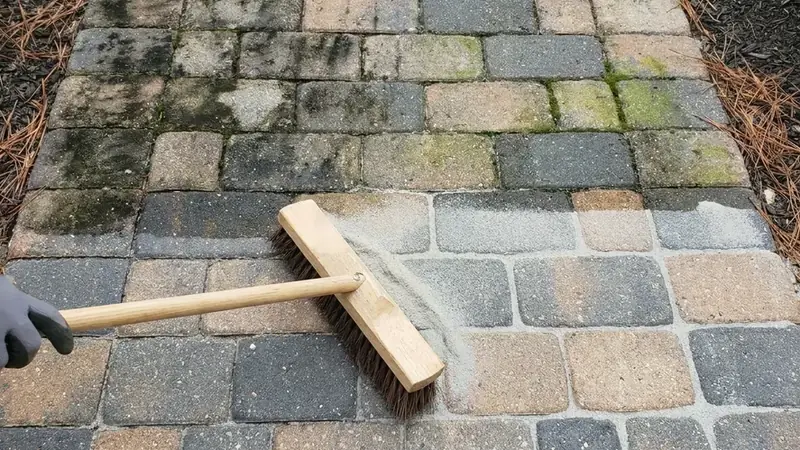
Washing pulls sand out of the joints. On the sandy ground of this part of Duval County, empty joints let soil in and invite weeds. Fresh sand made for pavers goes in and gets swept until the joints are full. Colored sand is sometimes offered if you want the joints to match the pavers. The joint sand is made for pavers, and it is swept until each seam is full.
Wait for the surface to dry
Sealer traps moisture if it goes on wet, which can turn it white. A manufacturer bulletin asks for about 24 hours of dry time after rain or washing. On a damp Southside lot near the creek, the contractor may wait a day longer. That wait is the cheapest way to avoid a hazy finish. If rain is in the forecast, the contractor may hold the sealer until a clear window opens. Wet seasons run May to September, so the dry-out is where Southside jobs most often slip a day.
Spray, back-roll and stay off
The contractor sprays an even coat and follows with a back-roll that pushes sealer into the joints. You can walk on it again in a few hours. Plan to keep cars off for about a day, and park on the street or in the garage that night. Sprinklers should stay off until the sealer has cured. Ask for the product name in writing, so a future owner or manager knows what is on the pavers.
Complete paver services in Southside
A Southside job goes in a set order: wash, re-sand, dry, seal. The wash lifts the gray film, and the sand it empties out of the joints gets replaced. Sealer goes on last, sprayed and then back-rolled so it reaches into the joints. To hear how long each stage takes on a driveway your size, call (904) 901-6561.
Surfaces here run from a front walk at a 1950s ranch to a pool deck behind a condo. Driveways take tires and oil, while pool decks take chlorine and bare feet. Film-forming sealer can turn slick on a deck, so many get a penetrating one instead. Tell the contractor which surfaces you have when you send a quick request.
Sealer choice has two parts, a water or solvent base and a matte or wet-look sheen. A water-based coat cannot go over a solvent-based one, and wet look shows scuffs sooner than matte. Ask for the product name in writing and keep it for the next coat, then call (904) 901-6561 when you are ready to choose.
Timing follows the weather. A manufacturer bulletin asks for 24 dry hours after rain or washing before sealer goes on. Southside rain falls mostly from May to September in short heavy bursts, so spring and autumn dates tend to hold better. To get on the calendar, send a quick request.
Questions to ask before you hire
- Do you wash the whole area the same way, or scrub the stained spots by hand?
- Is a weed killer used in the seams, and is it safe for my dog?
- Who decides when the surface has rested long enough after the wash for sealing to begin?
- Will the job slip a day if the pavers are still damp after a rainy week?
- Will I see the measured area and the rate on the quote before I agree?
- How often do pavers like mine need a fresh coat in Jacksonville weather?
- Can I leave a key or gate code, or must I be there at the start?
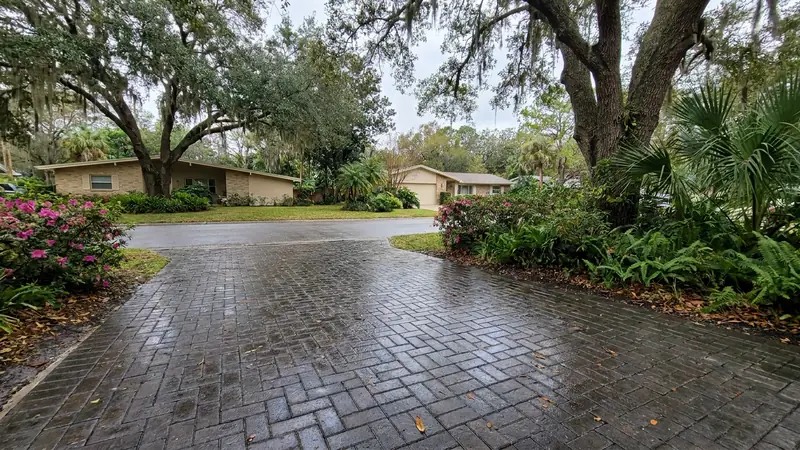
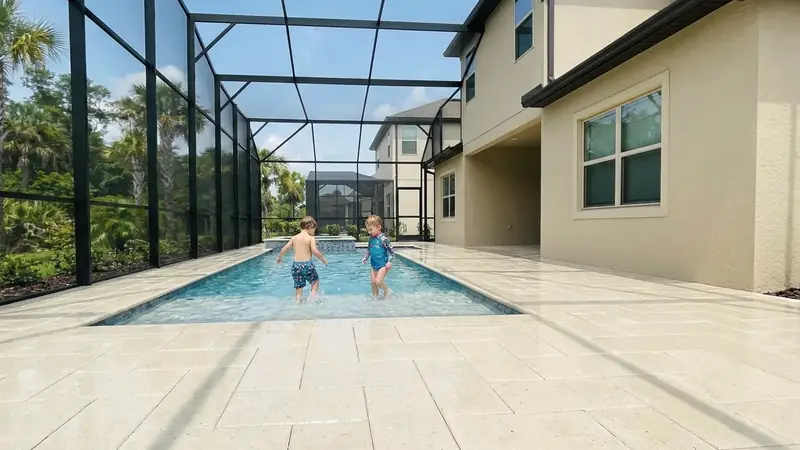
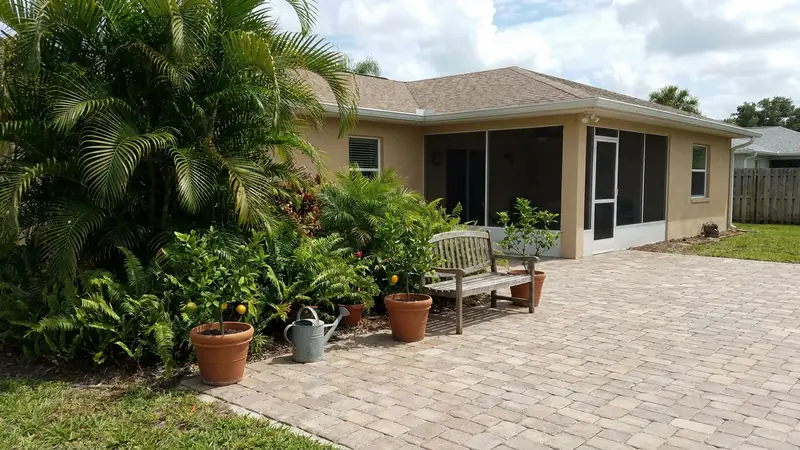
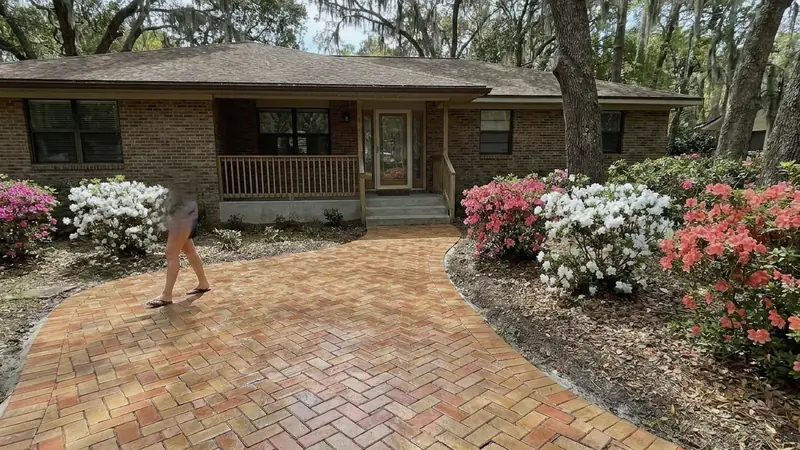
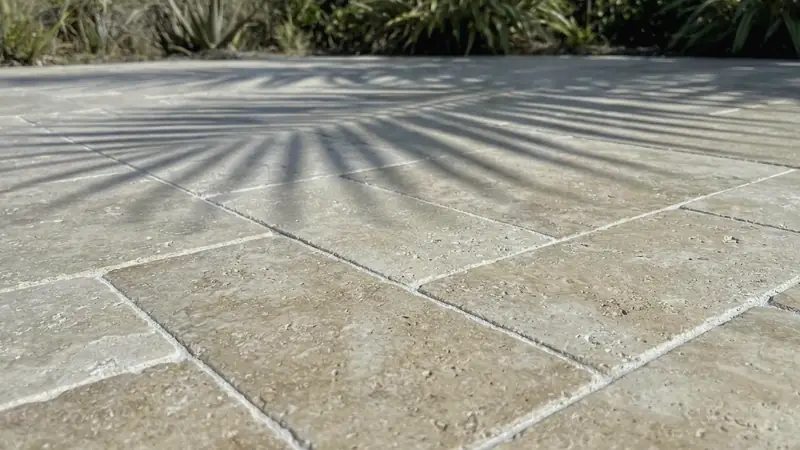
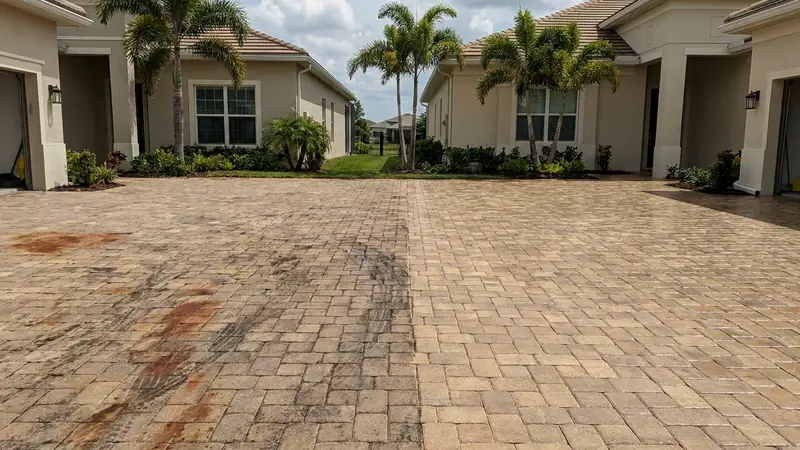
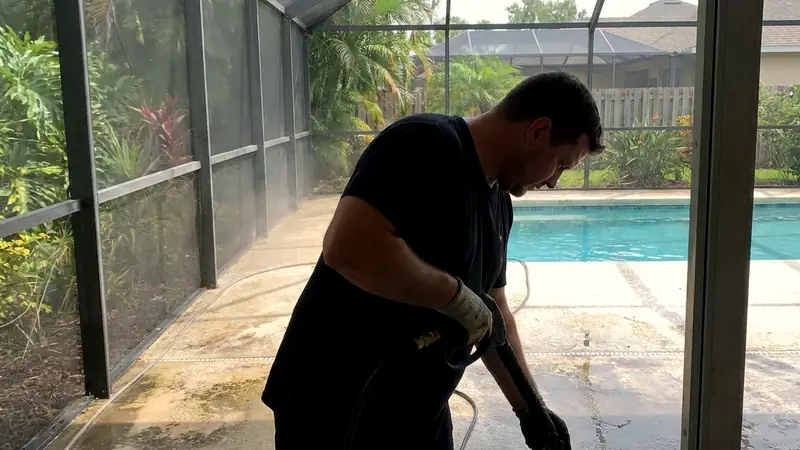
What do sealed pavers look like around Southside?
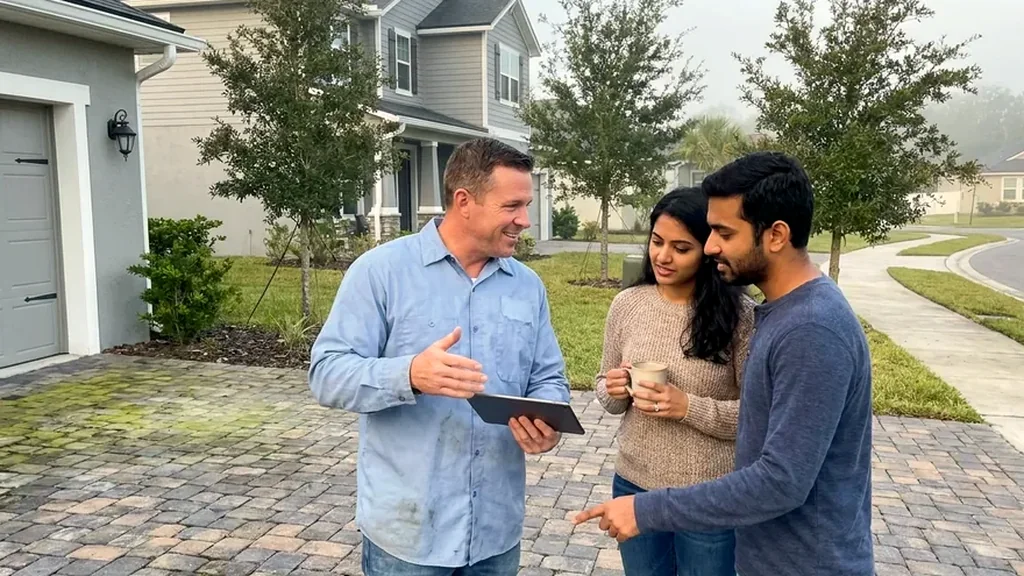
Why local matters in Southside
A contractor who works the Southside knows that the same ZIP holds single-family ranches and big condo communities. The first call is different for each. One needs a homeowner's go-ahead, the other may need a board's. Ask the question up front by calling (904) 901-6561, and the contractor will tell you what paperwork to gather.
Local knowledge also covers the ground itself. Sandy soil, afternoon storms and a creek that rises with runoff all change what a good sealing day looks like. Someone from outside Duval County may book a Tuesday that the weather ruins, and then you wait for another opening. You can send a quick request and ask how the contractor handles a washed-out day.
Then there is the age of the housing. Streets platted in the 1920s and built out by 1961 have had many owners, and pavers laid later may carry an old coat. A local contractor expects that and checks before choosing a product. If that sounds like your street, send a quick request and say roughly when the house was built.
What shaped the Southside neighborhoods around Beach Boulevard?
Roads did most of it. Philips Highway began as the Bayard Highway in 1934, and Beach Boulevard followed in 1949. Southgate Shopping Center followed on Beach Boulevard in 1957, one of the first suburban centers on the Southside. If your walkway needs work near there, send a quick request.
Farther south, Southpoint was once Skinner's Dairy pasture before its office park began in 1980. St. Luke's Hospital, now St. Vincent's Medical Center Southside, was built there in 1984. Pottsburg Creek, which shows on maps as early as 1824, starts near Southpoint. Whichever place is closest to your home, call (904) 901-6561 and name your street.
Frequently Asked Questions
What should I expect to pay per square foot for paver sealing in Southside?
Companies in this region list $1.75 to $3.25 per square foot for cleaning, sanding and sealing. That one figure covers the wash, the joint sand and the sealer. Where a Southside job lands depends on size, stains and old sealer, so the quote should show your measured area and the rate used.
Do pavers in Florida gain anything from sealing?
Yes, for most Southside driveways and patios, though a pool deck may call for a different sealer. Sealing holds the joint sand in place, which slows weeds and washout, and it shields the color from sun. It does need a new coat later, and companies commonly quote two to five years between coats. Full sun and daily tires push a driveway toward the short end of that span.
Which paver sealer works best in Florida?
There is no single winner, since the answer depends on the surface, the traffic and what is already on the pavers. Water-based and solvent-based products both get used, and a coat of one kind cannot go over the other. Matte keeps the natural look, while wet look adds shine and shows scuffs sooner. Ask the contractor what is already on your pavers before you pick.
Is there a pressure washing business that cleans and seals pavers on the Southside?
Yes, a local contractor can handle the washing and the sealing as one job, so you do not need a separate crew for each step. Washing removes joint sand, so it is replaced before the sealer goes on. Ask for the order of work in writing when you get your estimate. That lets you compare it with any other bid you collect.
Does an HOA in Southside have to approve paver sealing first?
Maybe. Florida law limits a homeowners association to the rules in its declaration or published guidelines, and it must apply them equally. A natural-look sealer is more likely to count as upkeep than a high gloss. Check your documents before the job is booked, and ask the board for a short written note if they are silent.
How soon can I use my driveway after sealing?
Walking on the surface is usually fine within a few hours. Cars should stay off for about a day, though the sealer and the weather set the final word. If you live in a Southside condo with assigned parking, ask the contractor to plan the work around your spot. Condo boards often want the schedule posted, so ask the contractor for a date range in writing.
Can a small Southside patio be sealed on its own?
Yes, though small jobs can cost more per square foot because prep time does not shrink with the area. A few companies set a minimum job size, so ask. A rate in writing lets you compare it with the published range, and a patio plus a walkway often brings the rate down.
Can pavers be sealed right after rain in Southside?
No. Sealer needs a dry surface, and one manufacturer asks for about 24 hours of dry time after rain or washing. On a low or shaded Southside lot, drying can take longer, so the contractor may move the date. Summer storms are common, so a flexible start date helps.
Nearby areas we serve
Ready for a Free Estimate in Southside?
Call (904) 901-6561 and tell us about your pavers.
Free, no obligation