
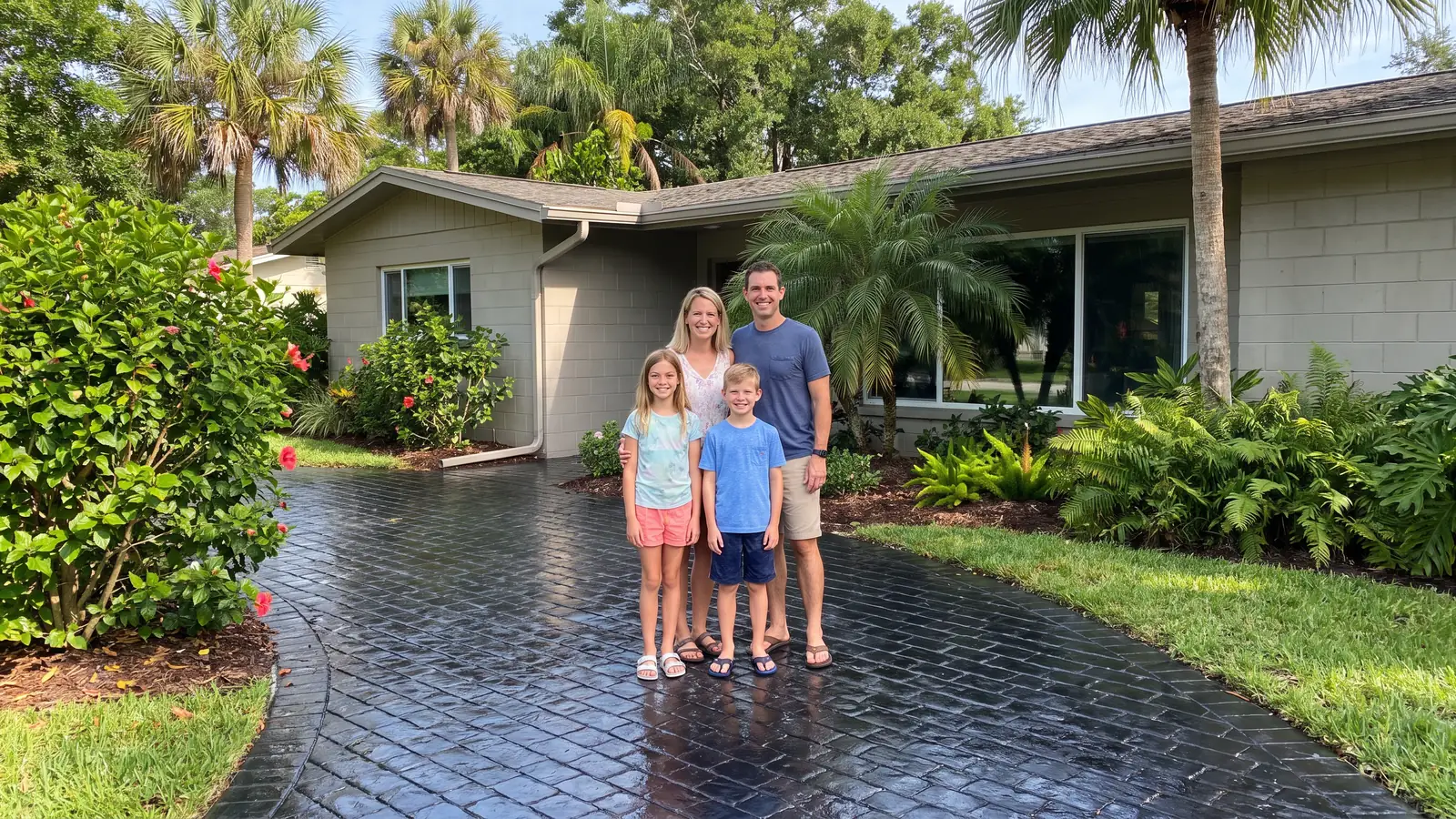
Paver sealing for Palm Valley homes
Paver Sealing in Palm Valley, FL
Palm Valley's Intracoastal breeze is hard on pavers, so call (904) 901-6561 for a free sealing estimate.
- Brings out deeper paver color
- Fresh joint sand helps lock pavers in place
- Gives weeds less room to grow
- Makes the surface easier to keep clean
- Free estimate, no obligation
Request a Free Estimate
Free, no obligation.
Fast, careful paver sealing in Palm Valley
Paver sealing is available across Palm Valley, from Palm Valley Landing and Plantation Oaks to the Odom's Mill streets near the Intracoastal. A local contractor can clean, re-sand and seal your driveway, pool deck or walkway. Pick up the phone and call (904) 901-6561, and your reply comes inside 1 business day, usually much sooner.
Look at your pool deck in the afternoon sun. If the color looks chalky and small white flecks show through the surface, the top layer is wearing thin. A wash, fresh sand and a coat of sealer bring back an even tone and keep splash from soaking in. To ask about your own lot, send a quick request, and the estimate is free with no obligation.
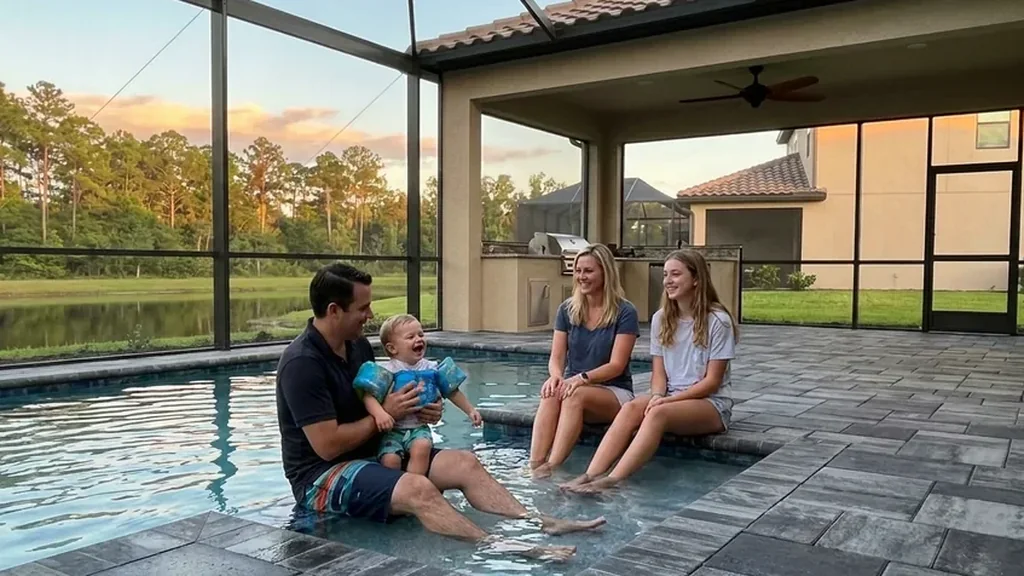
Why hire a local paver sealing contractor in Palm Valley?
Palm Valley sits between the Intracoastal Waterway and A1A, where salt air, sandy ground and pool decks all meet. A local contractor plans around that mix, so call (904) 901-6561 to hear how.
See the number first
A contractor measures your Palm Valley driveway, lanai or pool deck at no charge, so the price is on the table before you decide anything.
A range for comparison
Around here the going range for the whole job is $1.75 to $3.25 per square foot, which gives any bid something to be measured against.
Low sheen near the water
Around a pool, a low-sheen finish keeps glare down, one Jacksonville company notes, and some local companies offer added grip.
Your call
You choose the date and the finish, and the estimate carries no obligation.
Get Your Free Estimate in Palm Valley
Tell us about your pavers in Palm Valley.
Free, no obligation
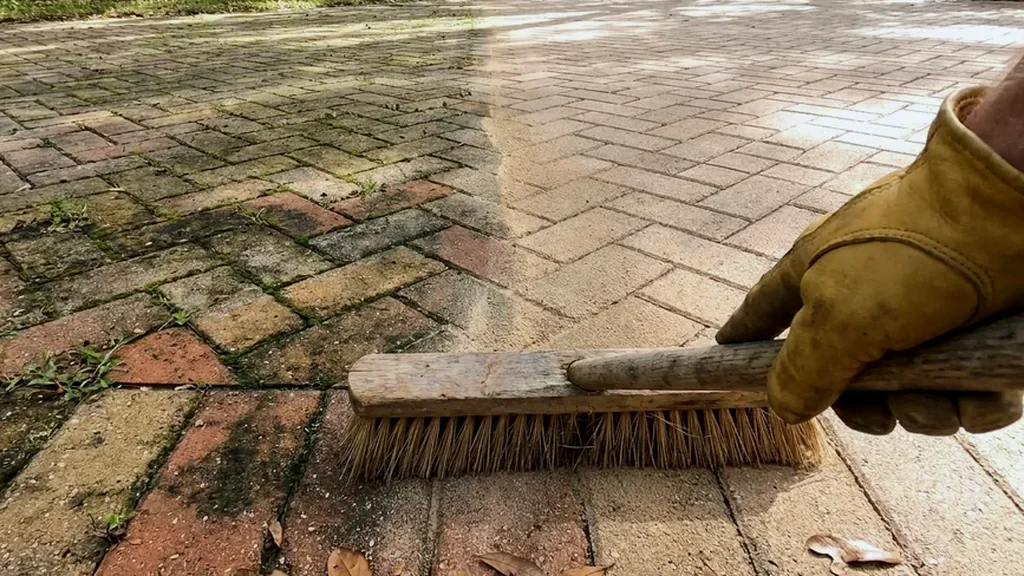
What paver problems show up most in Palm Valley?
Salt in the breeze
UF/IFAS says coastal sites deal with winds, inescapable salt and sandy, high-pH soils, and Palm Valley runs between the Intracoastal and A1A. A paver maker explains that airborne salt can crystallize on a surface as moisture dries. A Ponte Vedra company says salt plus sun makes older pavers look chalky. Sealing puts a barrier on the surface, which means less salt gets soaked up. Ask the contractor how a coat of sealer would work against that salt on your surface. That is why a pool deck or driveway near the water may need a coat sooner than one inland, though a contractor has to see the surface to say.
Ground that used to be marsh
A state marker at the Palm Valley Community Center says finishing the Intracoastal through here in 1912 drained much of what had been marshland. Wikipedia lists the elevation at zero feet. Low ground tends to drain slowly after a storm, so pavers can stay damp and green, and they need longer to dry before any coat. That wait can cost a day, which is better than sealing over trapped moisture. Ask the contractor to look for places where water lingers on your lot, and to plan the drying time to match. That history is why a contractor asks about drainage first.
Splash, rust rings and orange tint
A local power washing company says pool decks near the Intracoastal take extra stress from salt air. Splash-out from pools and overspray from well water can leave stubborn rings and orange tinting, it adds. Treat those marks before sealing, because a coat would trap them under the surface. The same goes for any deck where sprinklers reach the stone. Ask the contractor to check the deck edges and any planters, where splash and sprinkler water tend to leave marks. Odom's Mill has a community pool and more than 230 homes, so pool decks are part of daily life in Palm Valley.
Joint sand that rain takes away
A Ponte Vedra paver company blames sandy soil, full sun and afternoon storms most of the summer for making pavers age faster than ones ten miles inland. Sand that washes out leaves gaps, and gaps let in dirt, weeds and ants. Fresh sand and a sealer that holds it in place deal with the cause. Ask for new sand after every wash. Tell the contractor if weeds or ants have shown up, since both mean the seams are thin.
Hazy film from irrigation and rain
A local power washing company says moisture from summer storms and irrigation leaves mineral deposits that cause hazing. A state marker notes that this land was once hammock covered in oaks, magnolias and palms. If trees shade your walkway, expect green film where the sun seldom reaches. Both the haze and the film have to be washed off before sealing, or the coat locks them in. A quick walk with the contractor shows where the shade falls and which corners stay damp.
Does paver sealing change between the Intracoastal side of Palm Valley and the A1A side?
A little, mostly in how much salt air and shade your pavers get. Palm Valley runs between the Intracoastal Waterway and A1A, and UF/IFAS tells gardeners that sites within about an eighth of a mile of a coast need salt-tolerant plants. Waterfront lots are the likeliest to feel that breeze, while lots near the highway may see more tree shade. When you send a quick request, mention which side of Palm Valley you are on.
Wikipedia lists about six formal neighborhoods: Palm Valley Landing, Plantation Oaks, Seaside, Odom's Mill, Dolphin's Cove and the part of Sawgrass between A1A and the Intracoastal. Odom's Mill alone has more than 230 single-family homes of roughly 1,800 to 4,200 square feet, plus a community pool. Bigger homes often mean bigger drives and decks, so a measured quote matters. Call (904) 901-6561 and give the name of your subdivision.
Census estimates put the median Palm Valley home at 1991, so many pavers have been down for decades. Most occupied homes are owner occupied, 7,348 of 9,024, which means most of the decisions on finish rest with the owner. An HOA may still have a say, since Florida law ties its review of appearance to what its documents state. Check yours, then send a quick request.
What does paver sealing cost in Palm Valley?
Think of $1.75 to $3.25 per square foot as the published range for cleaning, re-sanding and sealing in this region. Stain work on a pool deck, or stripping an old coat, pushes a Palm Valley job up inside that range. A clean driveway with intact sand sits lower. For a measured quote, send a quick request.
A long driveway or a wrap-around deck adds area, so the total climbs even at the same rate. Sunken sections need repair before any sealer goes down, and brand-new pavers may need to wait before their first coat. Call (904) 901-6561, describe each surface, and ask which of these apply to your lot.
| Paved area | Typical example | Clean, sand and seal |
|---|---|---|
| 300 sq ft | Small patio or walkway | $525 to $975 |
| 600 sq ft | Two car driveway | $1,050 to $1,950 |
| 1,000 sq ft | Large driveway or pool deck | $1,750 to $3,250 |
| 1,500 sq ft | Driveway plus pool deck | $2,625 to $4,875 |
Math based on the $1.75 to $3.25 per square foot that Northeast Florida paver companies publish. Your contractor sets the actual price after seeing the surface. Repairs, leveling and stripping failed sealer are usually extra.
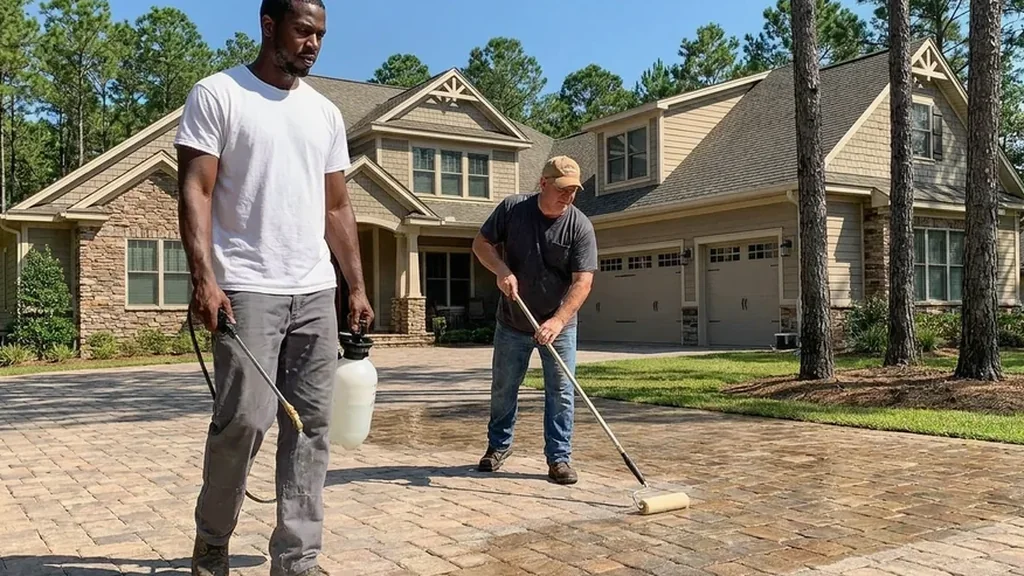
How does a paver sealing job work in Palm Valley?
Check moisture and mark the repairs
The contractor studies how water leaves your pavers, where shade sits and whether any section has sunk. One St. Johns County company says coastal properties often need a careful moisture check before sealing. Repairs come first, because anything left unfixed gets sealed in. Mention any leaks, rust lines or low spots you have noticed, since those shape the plan. Ask the contractor to point out each low spot so you can see it too.
Rinse off salt film, algae and rings
Washing lifts algae, chalky residue and the orange or white rings that pool splash and sprinklers leave. A paver maker notes that routine rinsing helps with salt buildup in coastal regions. Pool coping, steps and planter edges get a second look, because splash and dirt gather there. Stains that stay after the wash get their own treatment before the coat.
Fill the seams again
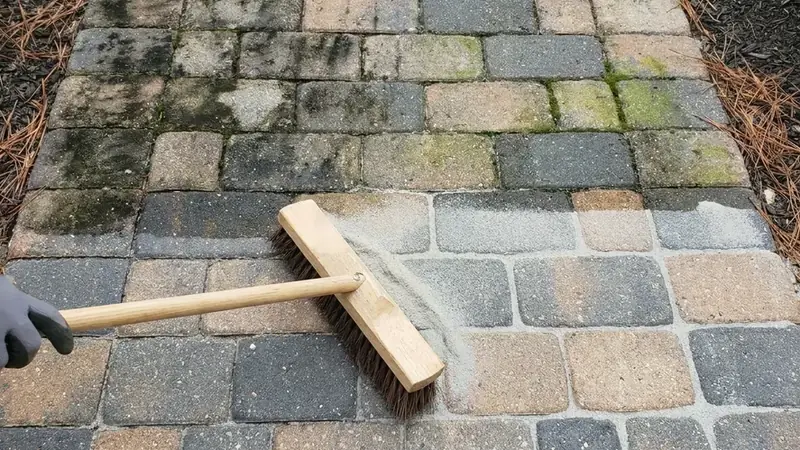
Fresh sand goes into the seams once washing has pulled the old sand out, and a broom finishes the surface. Full joints keep the pavers locked together and leave less room for weeds and ants. This matters on sandy ground, where rain keeps tugging at the seams. A matching sand shade is available.
Wait for dry pavers
Humidity slows drying near the water, so the contractor checks the surface for moisture before any coat goes on. Pavers beside pools and sprinklers can hold water longer than a sunny drive. If the surface is not dry, the coat waits a day. Ask the contractor how many dry hours the product needs before it is safe to apply. A deck in full sun may be ready sooner than a walk in the shade.
Apply the coat, then stay off
The coat goes on in the finish you chose: sprayed first, then rolled into the seams. Around the pool, a low sheen keeps glare down. Walking is usually fine within a few hours and cars stay off about a day, though the product and the weather can change that. Ask when sprinklers can go back on.
Complete paver services in Palm Valley
Palm Valley jobs run in a fixed order: wash, refill the joints, let the surface dry, then seal. That order clears salt film and stains before the coat goes on, so nothing is trapped underneath. Ask how many visits your driveway or deck would need by calling (904) 901-6561.
Lanai floors, pool decks, driveways and walkways all see different wear. Pool decks take splash, sun and chemicals, driveways take turning tires, and walks under palms and oaks stay shaded. Name each surface when you send a quick request, so the quote can price them separately.
Pick the product by what is already down, then by the look you want. A solvent-based coat already on the pavers rules out a water-based one. Matte gives a natural tone, and a wet look deepens color. For a pool surround, ask about a low sheen and added grip, then call (904) 901-6561.
Salt air and humidity set the pace near the Intracoastal, and a surface that is still damp has to wait. Steadier days make that easier, but a deck in full sun can dry fast in summer too. Pick a window with your contractor, and send a quick request to ask what is open.
Questions to ask before you hire
- If I only want the pool deck done, is that a smaller job with its own quote?
- Do you wash the whole area the same way, or scrub the stained spots by hand?
- Who decides when the surface has rested long enough after the wash for sealing to begin?
- Is refilling the joint sand after the wash part of the price?
- Does the sealing come with a written warranty, and who stands behind it?
- Can the job be done in sections so I can still park a car?
- Is a weed killer used in the seams, and is it safe for my dog?
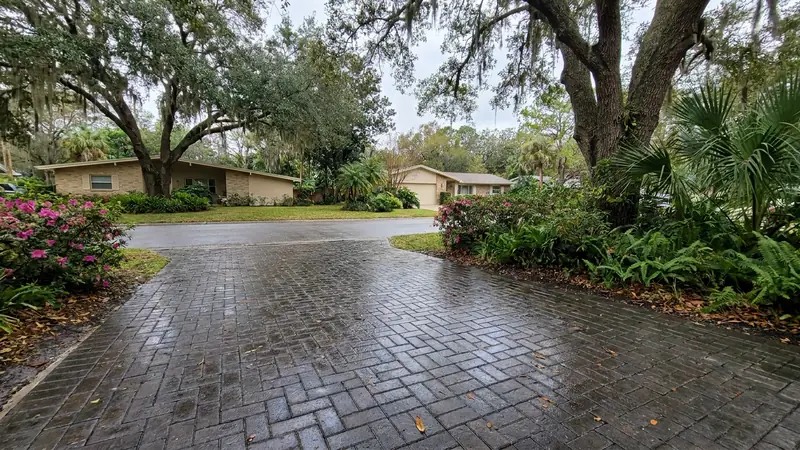
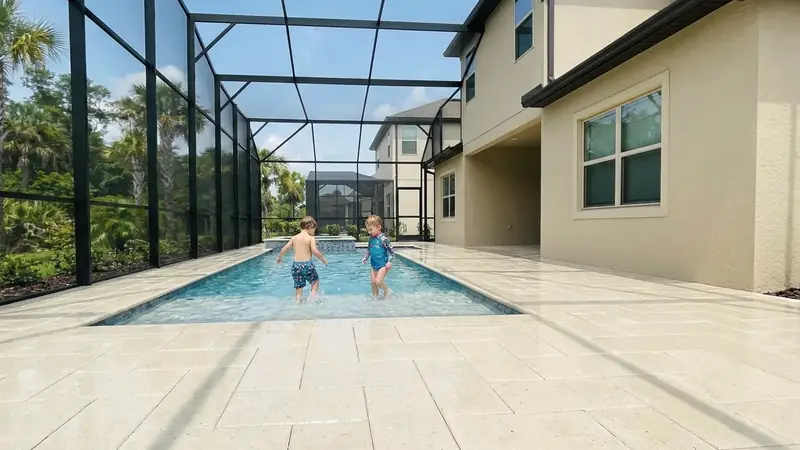
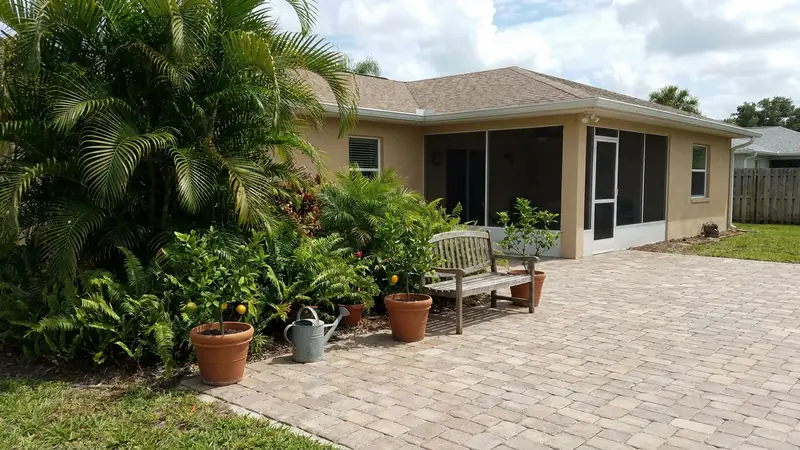
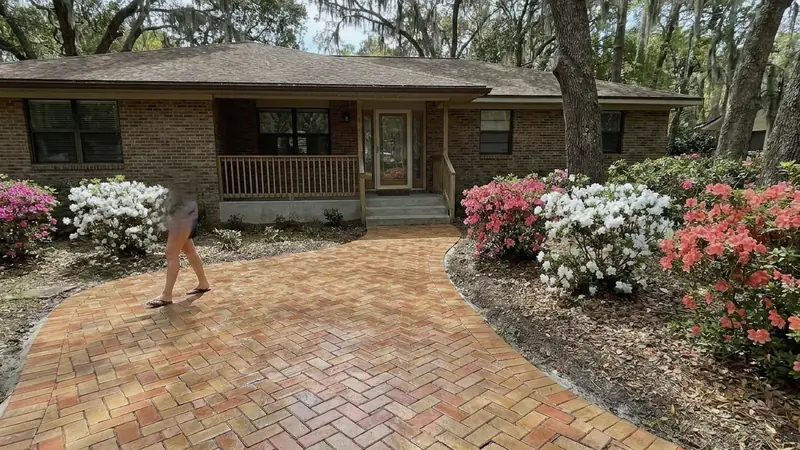
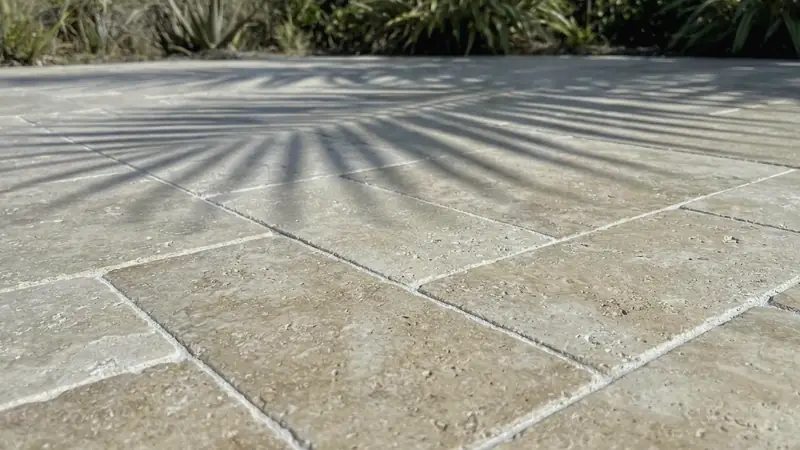
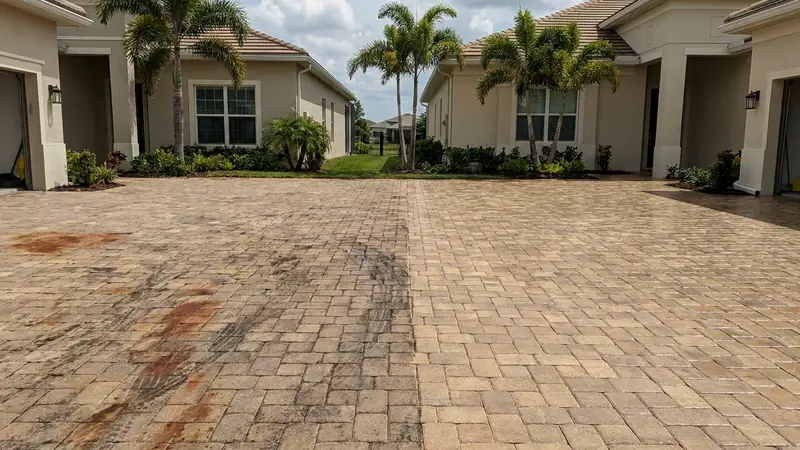
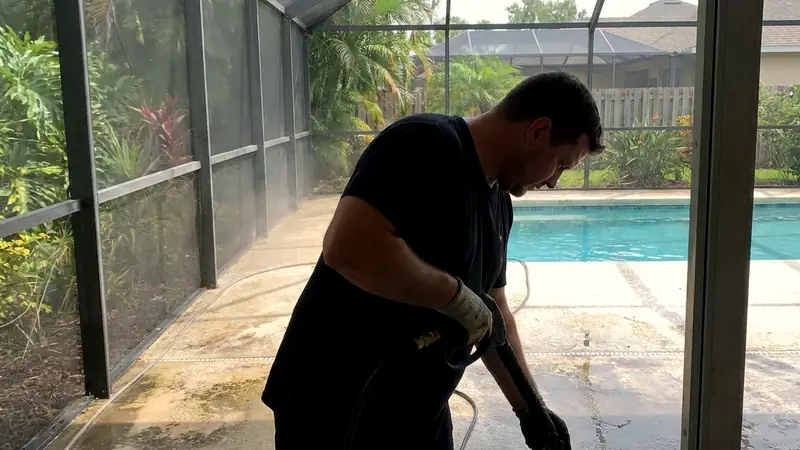
What do sealed pavers look like around Palm Valley?
Why local matters in Palm Valley
A contractor who works Palm Valley knows the lots run from the Intracoastal on one edge to A1A on the other, and that the salt breeze is not the same at both. That changes how often a surface may need a new coat. Call (904) 901-6561 to reach a contractor who serves this area, and expect a reply within 1 business day, usually much sooner.
Local knowledge shows up in the drying wait as well. Ground here was marshland before the waterway opened in 1912, and water can linger on low lots after a storm. A contractor who has seen that plans extra time for the pavers to dry, and tells you when it is safe to walk or park. Ask how that wait would work on your property when you send a quick request.
Odom's Mill and the other communities near Ponte Vedra Beach each have their own association habits. A local contractor knows to ask about HOA paperwork before the finish is picked, since a quick question to your board can save a second visit. Some owners also like to see the contractor's sealer name in writing so they can keep it for next time. When you send a quick request, mention any rules you already know about.
How did Palm Valley go from palm hammock to Intracoastal neighborhoods?
It started as a hammock of oaks, magnolias and palms known as the Plains of Diego, after Don Diego de Espinosa, who built a small fort nearby in the 1730s. Around 1900 the community took the name Palm Valley from the Sabal palm. Families later cut and shipped about 400,000 palm fronds a year to churches up north. If your street sits near Canal Boulevard, send a quick request and say so.
A canal dug through Diego Plains in 1908 joined the San Pablo and Tolomato rivers, and the Intracoastal opened in 1912. In 1948 neighbors moved a building from Camp Blanding to Canal Boulevard as a community center, and Palm Valley Road was once a dirt road. The Palm Valley Bridge carries County Road 210 over the waterway, and the Players Championship course sits in the Sawgrass part of town. When you call (904) 901-6561, mention the landmark you live nearest.
Frequently Asked Questions
What is the cost per square foot for sealing pavers in Palm Valley?
Quotes around here are listed at $1.75 to $3.25 per square foot for the full wash, sand and seal. Stain work and an old coat can push a Palm Valley job higher. Have the quote list the total area so you can run the numbers yourself. The estimate is free, so the number is yours before any work starts.
Is it good to seal pavers near the Intracoastal in Palm Valley?
In most cases, yes. Salt air, sun and storms all wear on pavers near the water, and sealer slows that wear. A paver maker says salt can crystallize on a surface as moisture dries, and that rinsing helps manage the buildup. Ask the contractor to look at your own surface before you decide.
Should paver sealer be sprayed or rolled in Palm Valley?
Most pros do both: spray first, then back-roll. A Jacksonville company explains that the spray evens out coverage and the roller pushes sealer into the joints. Rolling alone can leave lap marks, so ask how the work will be done.
Can a pressure washing contractor in Palm Valley seal my pavers?
Many pressure washing companies also seal pavers, and washing is part of every sealing job. Ask what sealer they use and whether they replace joint sand. A local contractor can explain the full wash, sand and seal steps at the free estimate. No obligation comes with the free estimate.
How often should pavers be sealed near the Intracoastal?
Between coats, local companies point to a span of two to five years. PaverGuard puts driveways near the coast and pool decks at about 18 to 24 months. Sprinkle water on the pavers: if it beads, the coat still works.
What finish works around a Palm Valley pool?
A low sheen is a common choice, since PaverGuard says it keeps glare down while still locking the joints and brightening color. A wet look deepens color, though its scuffs show more. Ask for a small test spot before you decide. Added grip is also offered by some local companies.
Will sealing fix sunken pavers in Palm Valley?
Not by itself, since sealer locks in a sunken spot instead of leveling it, so repairs come first. The usual fix is to lift the section, level the base under it, and reset the pavers before washing and sealing. Point out low spots and tree-root bumps at the first visit.
How long do I wait to seal new pavers in Palm Valley?
A company near St. Augustine says new pavers should rest about 60 to 90 days before the first coat. That gives trapped moisture time to escape and lets any white mineral haze rise to the surface, where it can be treated first. Your installer or builder can tell you when the pavers went in.
Ready for a Free Estimate in Palm Valley?
Call (904) 901-6561 and tell us about your pavers.
Free, no obligation